Post-Migration Reality Check: Debugging FedEx REST API Production Failures That Don't Exist in SOAP

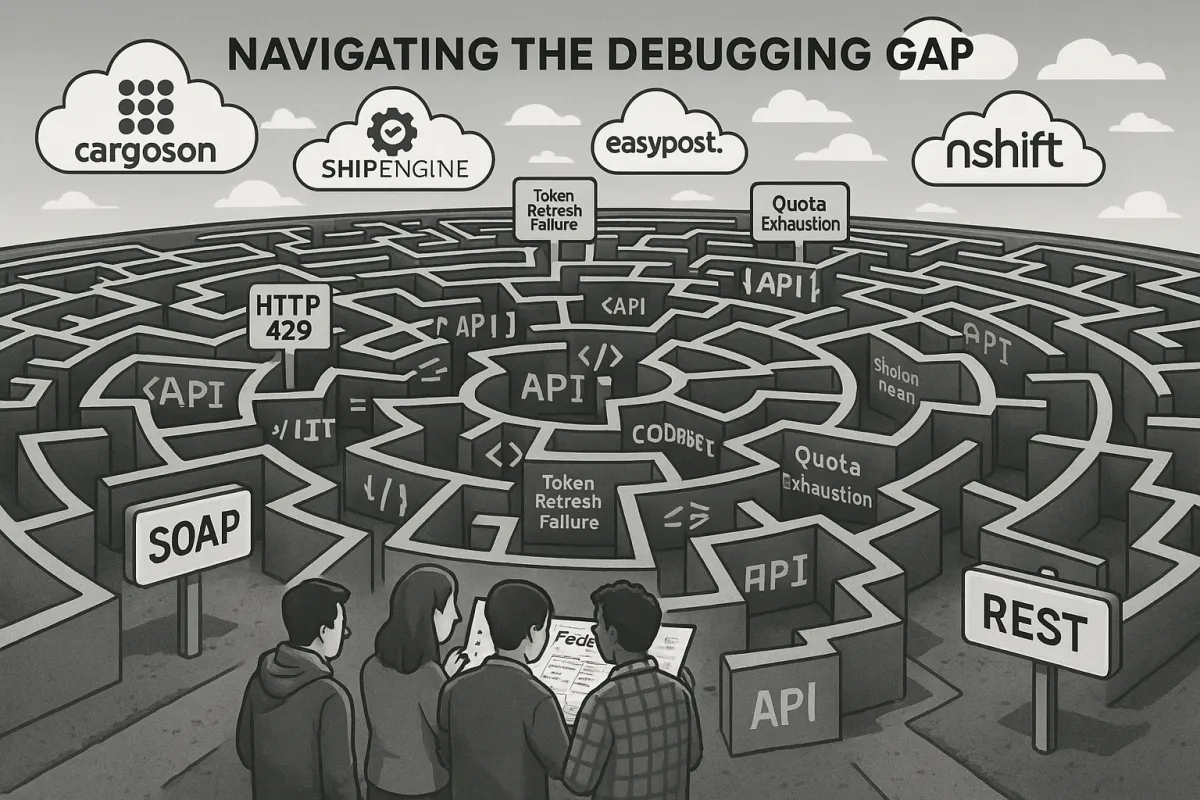
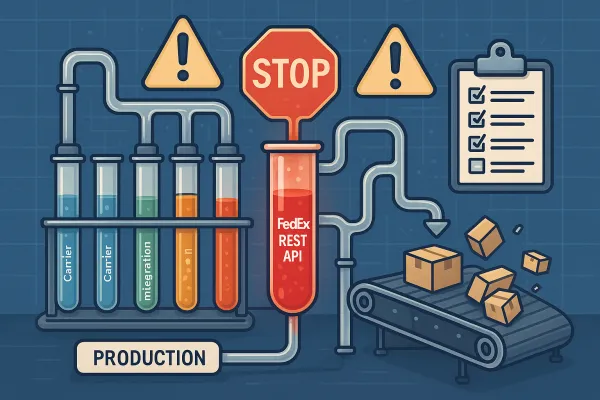
Your migration passed integration testing. Your parallel runs validated the payload mappings. You even cleared FedEx's certification requirements. But three weeks into production, your error rates are climbing faster than your retry queues can handle. Welcome to the post-migration debugging gap where legacy SOAP error codes don't map cleanly to REST responses, causing retry logic to assume certain failures are temporary when they're actually permanent, resulting in infinite retry loops that hammer new endpoints until you get blocked.
The June 2026 FedEx SOAP retirement deadline has created more than just migration pressure. It's exposed how differently REST APIs behave under production load compared to their SOAP predecessors. Multi-carrier platforms like Cargoson, ShipEngine, EasyPost, and nShift have handled hundreds of these migrations with higher success rates precisely because they've already debugged these production failure modes at scale.
The Post-Migration Debugging Gap
Your old SOAP integration handled throttling with simple fault responses. FedEx's REST API introduces HTTP 429 responses when receiving 1400 requests in the first 2 seconds, throttling subsequent transactions for the next 8 seconds. This isn't just a status code change. Your retry logic now faces cascading failures where authentication tokens expire during high-volume periods.
Production generates thousands of concurrent calls requiring fresh tokens, but new APIs implement stricter rate limiting, causing token refresh logic to fail when hitting 50+ requests per second. Sound familiar? You're not alone. 73% of integration teams reported production authentication failures during similar carrier API migrations.
Error Code Translation Failures
Here's where most teams get stuck. FedEx returns HTTP 429 when receiving 1400 transactions over 10 seconds, with a message stating "We have received too many requests in a short duration. Please wait a while to try again" and restricts transactions for the next six seconds. Your SOAP-era retry logic interprets this as a temporary service hiccup and immediately retries with exponential backoff.
The fix requires understanding FedEx's specific rate limiting implementation. Cache the access token until HTTP 401 is observed, then regenerate the OAuth token at that time. Stop generating fresh tokens for every batch operation.
Log every 429 response with its accompanying headers. Some responses include errors, warnings, or notes that should be logged and examined, as warnings and notes are not failure indications. Your monitoring needs to distinguish between quota exhaustion and service unavailability.
Monitoring Architecture for REST-Specific Failure Patterns
Legacy performance baselines become useless post-migration. Your SOAP integrations might have averaged 200ms response times, but REST endpoints behave differently under concurrent load. Each FedEx project has a transaction rate limit of 1,400 transactions in 10 seconds, with throttling restrictions applied when this limit is exceeded.
Implement request correlation using FedEx's x-customer-transaction-id header. This allows you to trace individual requests through your entire stack, from initial API call through any retry attempts. When debugging production failures, you need to correlate timing with FedEx's rate windows, not just your application logs.
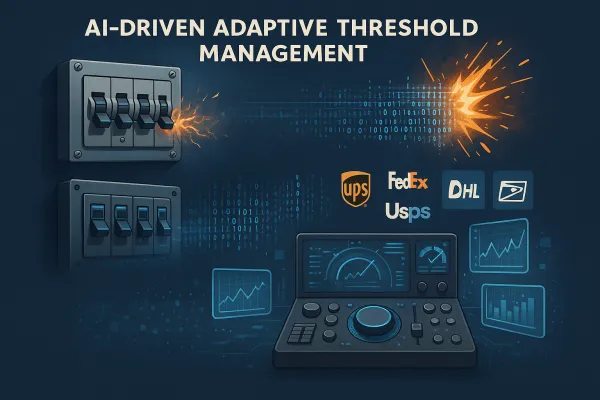
Enterprise TMS platforms like Cargoson, Manhattan Associates, and SAP TM have solved this by building monitoring specifically around carrier API quotas. They track usage patterns across multiple clients and can predict when rate limits will be hit before failures occur.
OAuth Token Cascade Failures
Authentication failures multiply under load. FedEx applies IP-based thresholds for OAuth token generation with burst limits of 3 hits per second continuously during 5 seconds, and average thresholds of 1 hit per second continuously during 2 minutes. Violate these limits and your entire IP gets blocked for 10 minutes.
Debug authentication cascades by implementing token pooling. Generate tokens proactively based on your expected request volume, not reactively when requests fail. OAuth tokens remain valid for one hour - use the full duration before requesting new tokens.
Monitor your token refresh patterns. If you're requesting new tokens more than once per hour per application instance, you're likely triggering the very rate limits that cause your shipping workflows to fail.
Test Harnesses That Actually Predict REST Production Behavior
Tests require reliable real APIs, sandboxes, or virtual services for all dependencies. FedEx's sandbox environment has well-documented reliability issues. Developers complain about the FedEx Sandbox API environment having issues without estimated fixes, returning intermittent errors, test data problems, and intermittent downtime.
Build test scenarios that simulate rate limiting behavior. Don't just test happy path integrations. Your test harness needs to validate how your application handles daily quota violations returning "429 - Too many requests - Daily transaction quota exceeded. Retry after 12:00AM GMT".
Parallel Run Strategy Implementation
The most successful migrations implement dual-API capabilities during transition periods. Build adapter layers that route requests to either legacy or modern APIs based on configuration flags, allowing you to test production traffic loads against new endpoints while maintaining fallback capability.
Your adapter layer should include circuit breaker logic. When REST endpoints return consecutive 429s, automatically fail back to SOAP until the rate limit window resets. FedEx requires API certification and solution validation before moving projects to production, so plan this parallel architecture into your certification timeline.
Production-Ready Error Handling Patterns
Effective REST API debugging requires structured logging that captures the context FedEx provides. Each API response contains HTTP status codes and response payload, sometimes accompanied by errors, warnings, or notes that should be logged and examined. Code against error codes, not error messages, since messages can change dynamically.
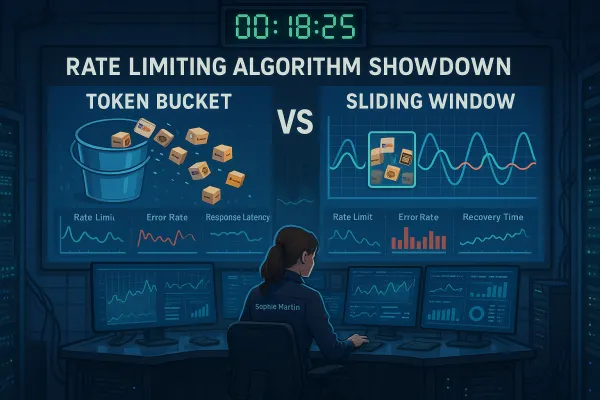
Implement exponential backoff with jitter for 429 responses. The most effective fix is implementing exponential backoff algorithms that wait for initial delay periods and then increase delays exponentially for each subsequent failure. Without randomization, multiple application instances retry simultaneously, creating synchronized bursts that generate more 429s.
Structured Logging for Migration Debugging
Your production logs need to capture more than just error messages. Include FedEx's transaction IDs, your correlation IDs, response timing, and any rate limit headers in every log entry. When debugging cascade failures, you need to correlate events across multiple services and time windows.
Structure logs to enable automated analysis. Include fields for API endpoint, HTTP status, retry attempt number, backoff delay used, and remaining quota from response headers. This data becomes critical when debugging why certain failure patterns occur only under specific load conditions.
The Infrastructure vs Feature Decision
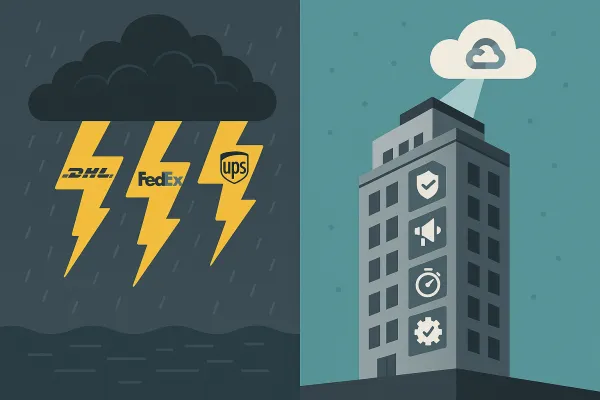
Companies that survive carrier API migrations recognize that shipping integrations are infrastructure, not features. You can't treat FedEx REST API integration as a development task you complete and forget. Enterprise TMS platforms like Cargoson, Manhattan Associates, and SAP TM manage dual-API operations for clients during transition periods because they understand this principle.
Multi-carrier platforms benefit from battle-tested infrastructure that handles carrier API failures across thousands of clients. When FedEx changes rate limiting policies or introduces new authentication requirements, platforms like EasyPost, ShipEngine, nShift, and Cargoson absorb that operational complexity so their clients don't face production failures.
The question isn't whether your FedEx REST integration works. The question is whether your organization has the operational capability to maintain it through the inevitable API changes, rate limit adjustments, and service disruptions that define production carrier integrations. Many companies discover too late that they built a feature when they needed infrastructure.