Legacy Carrier API Migration Crisis: How Enterprise Teams Navigate 2026's Hard Deadlines for USPS Web Tools and FedEx SOAP Retirement

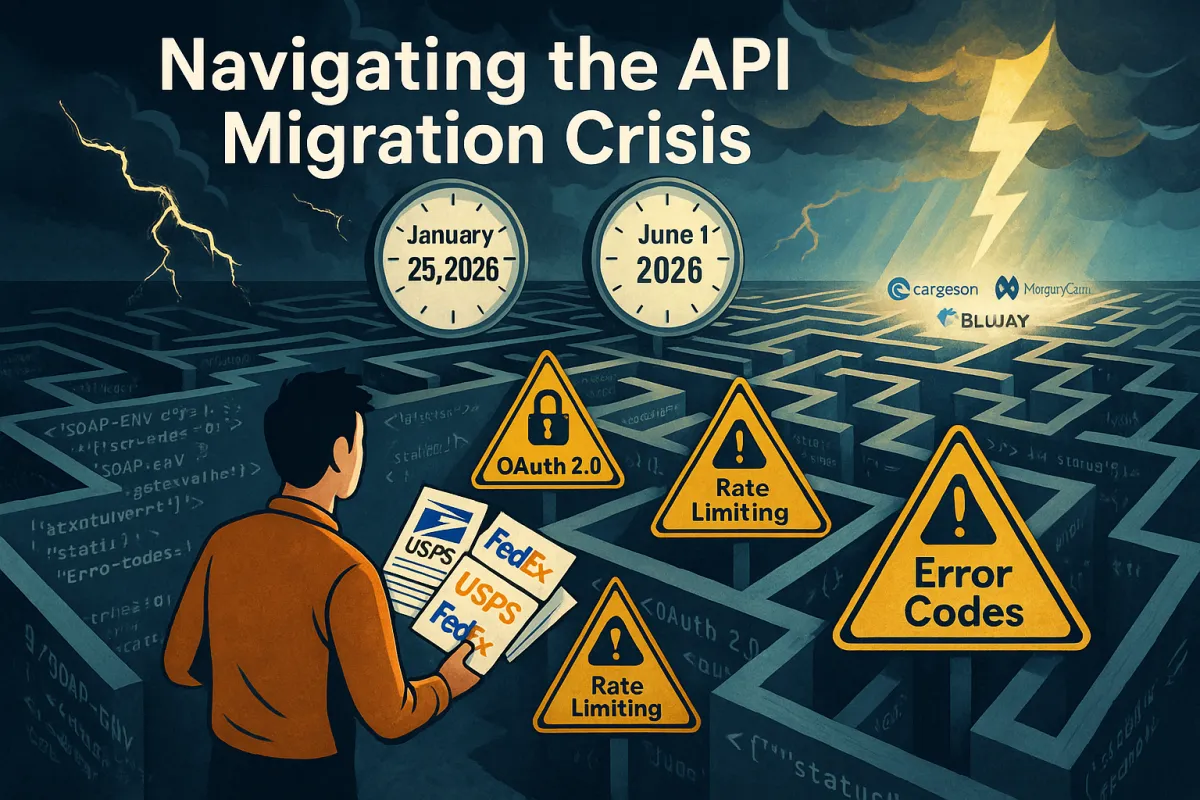
The Web Tools API platform shut down on Sunday, January 25, 2026, marking just the beginning of a massive wave of carrier API retirements hitting enterprise integration teams. June 2026: Remaining SOAP-based endpoints will be fully retired. After this, integrations must use FedEx's REST APIs to access rates, labels, tracking, and future service updates. For the thousands of companies still running legacy integrations, this isn't just a technical upgrade. It's a forced march through production deployment hell.
The scale of this problem is staggering. While data migration failure rates drop by 73% with proper planning, most teams are discovering these deadlines months too late. Between Q1 2024 and Q1 2025, API uptime fell as systems faced mounting pressure from complexity increases and legacy system strain. Now you're racing against hard deadlines while dealing with deteriorating baseline performance.
The Brutal Reality: Why 72% of Migration Teams Hit Critical Production Failures
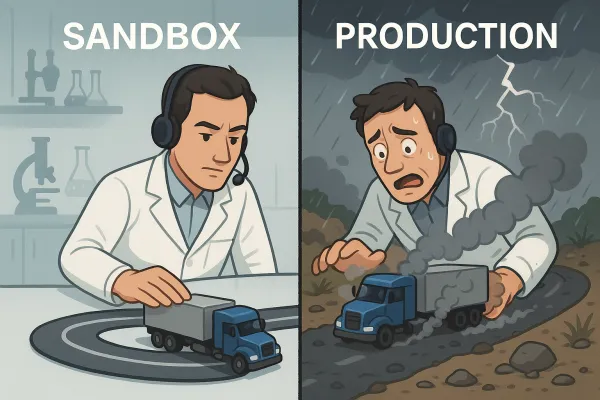
Your sandbox tests passed. Your staging environment looks perfect. Then production explodes. Sound familiar?
The gap between sandbox testing and production reality has always existed, but with carrier API migrations, it's become a death trap. Data validation failure rates exceeding 5%, critical application functionality being unavailable, or migration downtime surpassing the planned window become rollback triggers that most teams hit within their first month.
Here's what actually breaks:
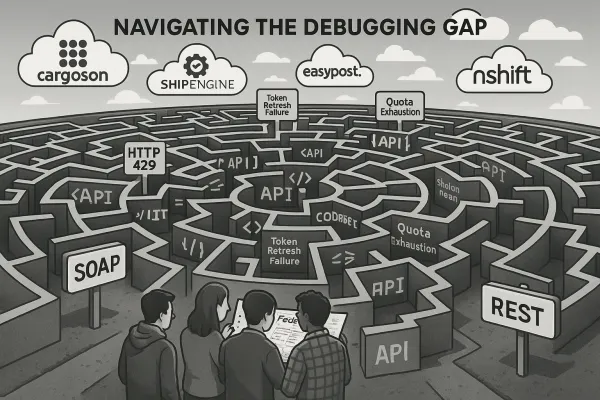
OAuth 2.0 Token Management Under Load: Your test scenarios used a handful of requests. Production generates thousands of concurrent calls, each requiring fresh tokens. The new APIs implement stricter rate limiting, and your token refresh logic starts failing when you hit 50+ requests per second.
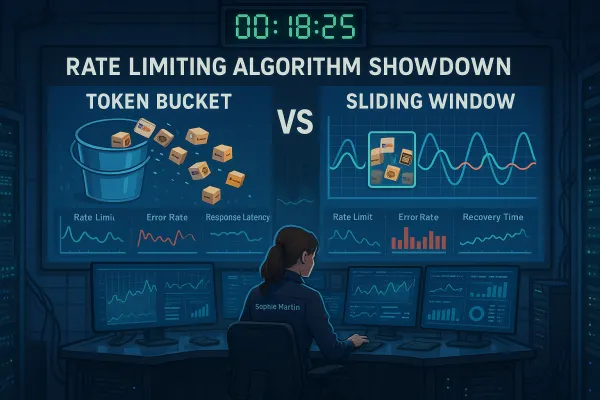
Rate Limiting Reality Check: USPS's new API rate limit is set at 60 requests per hour. Your old Web Tools integration processed 300 address validations during peak shipping hours. You do the math.
Error Code Translation Gaps: Legacy SOAP error codes don't map cleanly to REST responses. Your retry logic assumes certain failures are temporary when they're actually permanent in the new API structure. Result: infinite retry loops that hammer the new endpoints until you get blocked.
Third-party platforms like Cargoson, ShipEngine, EasyPost, and nShift have handled hundreds of these migrations. Their success rates are higher precisely because they've already debugged these production failure modes at scale.
USPS Web Tools to USPS APIs: The Technical Migration Reality
All Web Tools API users must switch now to USPS APIs. The migration isn't backward compatible, and for IT and engineering teams, this means rebuilding authentication, endpoints, error handling, and operational workflows—likely under tight timelines for those that haven't yet made the switch.
The endpoint structure changes are extensive. Your current Address Validation API call structure gets completely rebuilt. Where you previously sent XML requests to a single endpoint with embedded credentials, you now manage OAuth tokens, send JSON payloads to RESTful endpoints, and handle different response schemas.
Authentication Overhaul: The new USPS APIs (https://developers.usps.com) offer modernized security and authentication methods via OAuth 2.0. This isn't just swapping out an API key. You need token refresh logic, proper scope management, and error handling for authentication failures that can cascade across your entire shipping workflow.
The Rate Limiting Disaster: For small businesses or those who only require occasional address validation, this may still be manageable. However, for businesses with large customer bases, frequent data imports, or those relying on bulk address cleanses, the limitations of this new API will quickly become apparent. Enterprise shippers processing thousands of addresses during order imports face immediate bottlenecks.
Multi-carrier shipping platforms have already solved these problems. Cargoson, along with competitors like MercuryGate and BluJay, built abstraction layers that handle the OAuth complexity, implement intelligent rate limiting queues, and provide fallback mechanisms when USPS quotas are exceeded.
FedEx SOAP to REST Migration: June 2026 Countdown
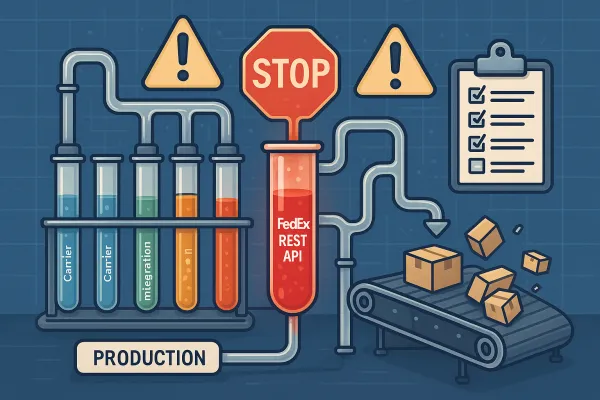
Web Services (SOAP) will be retired on June 1, 2026. To avoid disruption, please plan to migrate your solution immediately by visiting https://developer.fedex.com/. Unlike USPS, where the deadline already passed, you still have months to prepare for FedEx. Don't waste them.
The WSDL retirement means every integration touching FedEx services requires a complete rebuild. Both carriers are moving to a RESTful API using a more advanced security model like OAuth 2.0 instead of single access key authentication. Shippers who are using older protocols like XML or SOAP for their API integrations will have to make a conversion to something that's RESTful compatible.
Service Mapping Complexity: Your existing SOAP calls don't translate one-to-one. Rate shopping, label generation, and tracking require new endpoint structures, different request formatting, and updated response parsing. The JSON payloads use different field names, nesting structures, and data types than your SOAP XML.
Testing Window Strategy: Unlike USPS's abrupt cutoff, FedEx provides a longer transition period. Use it. Run parallel systems where your application calls both SOAP and REST endpoints simultaneously, comparing results to identify discrepancies before the June deadline.
Enterprise TMS platforms like Cargoson, Manhattan Associates, and SAP TM have already implemented FedEx REST endpoints and are managing dual-API operations for clients during the transition period.
Building Zero-Downtime Migration Architectures
The secret to surviving carrier API migrations isn't perfect planning. It's building systems that can fail gracefully and recover quickly.
Parallel Run Strategy: Never switch entirely at once. Build adapter layers that can route requests to either legacy or modern APIs based on configuration flags. This lets you test production traffic loads against new endpoints while maintaining fallback capability.
Circuit Breaker Implementation: When the new USPS API hits rate limits or returns errors, your circuit breaker should immediately route traffic to backup services. Use retry logic to handle transient failures without disrupting the user experience. Set up failover logic to reroute traffic or trigger backups if the primary API goes down.
Monitoring Everything: Implement third-party API monitoring to track uptime, latency, and error rates in real time. Don't just monitor your application. Monitor the carrier APIs themselves, because logistics saw the sharpest decline in API uptime as providers expanded their digital ecosystems.
Production-ready architectures require more than hoping the new APIs work. Companies using multi-carrier platforms like Cargoson, ShipperHQ, or Shippo benefit from infrastructure that's already battle-tested against carrier API failures.
Post-Migration: Monitoring and Operational Resilience
Migration completion doesn't mean you're done. It means you're entering a new phase of operational complexity.
New Error Patterns: REST APIs return different error codes than SOAP. HTTP 429 (rate limited) becomes your new nemesis. Your monitoring needs to distinguish between temporary throttling and actual service failures, because your response strategy differs completely.
Performance Baseline Reset: Your old Web Tools integration might have averaged 200ms response times. The new USPS APIs could be faster or slower, but with different characteristics under load. As APIs power real-time services, even minor delays or inconsistent response patterns can degrade the digital experience. A broad distribution of typical response times reflects more than occasional slowness — it points to a lack of consistency under normal operating conditions.
Long-term Maintenance: Carrier APIs continue evolving after migration. OAuth tokens expire, endpoint URLs change, rate limits adjust seasonally. You need monitoring that catches these changes before they break production systems.
Future-Proofing Against the Next Migration Wave
This isn't the last carrier API migration you'll face. Even after these migrations are complete, carriers will continue updating pricing logic, delivery data, security requirements, and services.
Abstraction Layer Strategy: Build or buy integration platforms that isolate your business logic from carrier-specific implementation details. When UPS decides to retire their current REST APIs in 2028, you want configuration changes, not code rewrites.
Multi-Carrier Redundancy: Don't depend entirely on any single carrier's API reliability. Between Q1 2024 and Q1 2025, API uptime fell and systems faced greater pressure under rising user expectations, complexity, and AI adoption. APIs power real-time data exchange, which is essential for both enabling LLMs to deliver accurate outputs and for enabling reliable access to AI capabilities across applications.
Enterprise shipping platforms like Cargoson, project44, and Descartes provide exactly this abstraction. They handle carrier API changes, manage authentication complexity, and provide unified interfaces that survive individual carrier migrations.
The companies that survive 2026's migration crisis won't be the ones with perfect technical execution. They'll be the ones who recognized that carrier integrations are infrastructure, not features, and invested accordingly. Your choice: spend the next six months debugging OAuth flows and rate limiting edge cases, or let someone else handle that while you focus on growing your business.